Insights · 2026-05-27
Dental industry trade show booths — what actually works
IDS, Chicago Midwinter, ADA, Hinman. Four shows, one show year, very different floor plans. What separates the booths that survive the calendar from the ones that get rebuilt three times.
By Rodney Lamar · 2026-05-27 · 7 min read
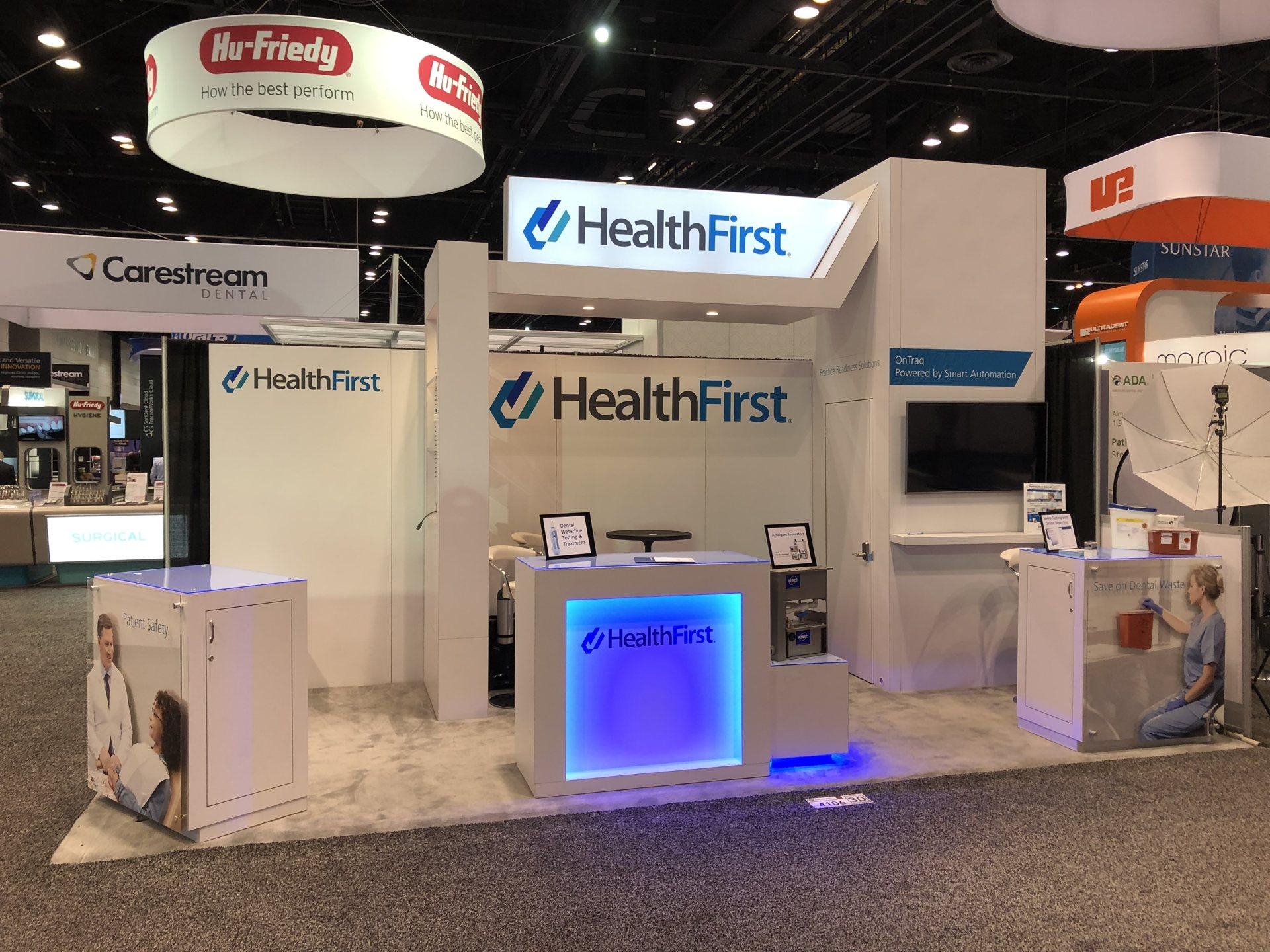
Dental is a big part of what we do, so I've got opinions here — earned ones. We've built for HealthFirst, BlancOne, ExtremityCare, SurgiTel, and a long list of others, and the dental and medical floor has its own personality. If you're a marketing lead trying to spec a dental industry trade show booth that survives a full show year, here's what I've learned actually works — and what just quietly costs you money.
The short version: a dental booth isn't a one-time purchase, it's a program. The brands that get the most out of their money build for the whole calendar, keep the structure flexible, respect the rules, and leave room for a real conversation. Let me break that down.
The dental show year is a marathon, not a sprint
Most dental brands aren't at one show. They're at several — Chicago Midwinter in February, the big international IDS in Cologne, the ADA meeting, Hinman, plus a stack of regional state-society shows. Different cities, different floor plans, different load-in rules, and not a lot of breathing room between them.
So the first question isn't "what booth do I want." It's "what booth survives my calendar." A gorgeous one-off custom build that has to be rebuilt for every footprint will bleed you dry over a year. The booths that work are designed from day one to re-skin and resize without starting over. That usually means a smart modular backbone — something you can run as a 20×20 island in one city and break down to a 10×20 inline in the next — dressed in graphics that swap out fast. One set of bones, a wardrobe of looks.
Your product wall is the booth
In a lot of industries the booth is a backdrop. In dental, the product is the show. Clinicians want to get their hands on the unit, the handpiece, the whitening system, the chair. So the wall that holds your products has to do real work: hold weight, light the product well, and let you swap things out between launches without calling in a contractor.
We build these as modular, hot-swappable systems on purpose. When you launch something new next quarter, you shouldn't have to rebuild a wall to show it — you should be able to re-merchandise it in an afternoon. That's the difference between a booth that ages with your product line and one that's obsolete by the second show.
Mind the rules — dental graphics aren't a free-for-all
Product claims, FDA considerations, on-floor demo guidelines that change show to show — dental has more graphic rules than most industries. The booths that get into trouble are the ones where nobody checked the claims copy until it was already printed and hanging over the aisle. We build a graphics review into the process so you catch the problem at the shop, on a proof, not on the floor in front of a regulator with the booth already up. Final regulatory sign-off is always yours, but our job is to make sure the problem surfaces while it's still cheap to fix.
Demo and conversation space beats flash
The best dental booths I've built aren't the flashiest. They're the ones that gave the rep a comfortable spot to sit a clinician down, demo the product, and actually talk. A wall of lights that photographs well but leaves no room for a conversation is a booth that didn't do its job.
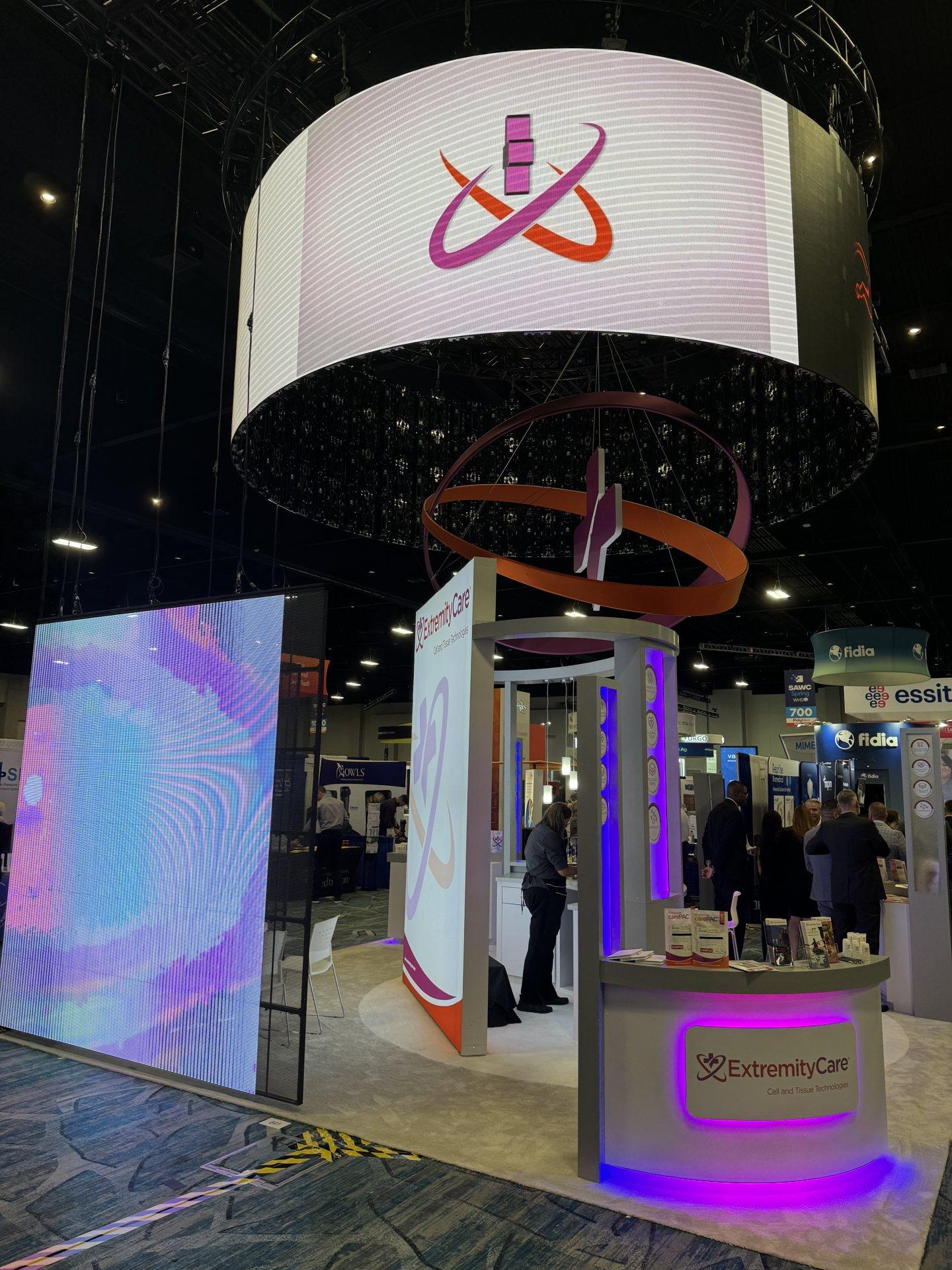
Now — sometimes flash is the job. The suspended circular LED ring island we built for ExtremityCare pulled the whole aisle over and became one of the most-photographed booths on the floor. But even there, the magic was that the spectacle got people in, and then there was somewhere real for them to land. Draw the crowd, then give them a reason to stay.
The same logic shapes the floor plan. Open corners pull traffic in; a single choke point pushes it away. We design sightlines so a clinician can see the product from the aisle, walk straight to it, and end up at a counter where a rep is already standing. Seating matters more than people expect, too — a stool and a clean surface turn a thirty-second pass-by into a real conversation, and real conversations are what you came to the show for. None of this shows up in a glamour photo, but it's the difference between a booth that's busy all show and one that looks great and stays empty. Flash gets the photo; layout gets the meeting.
Sizing the booth to the show
One booth program usually spans more than one footprint, so it helps to think in sizes. For the big international and national shows, a 30×30 island designed for re-deploy gives you presence and a feature moment that reads from across the hall. For the shows where conversations matter most, a 20×20 peninsula with a private demo zone lets a rep pull a clinician aside without losing the open, welcoming feel. And for regional state-society shows, a 10×20 inline — or a re-skinned modular version of your larger booth — keeps you visible without overbuilding for a smaller floor.
The trick is designing the largest footprint first and making sure it breaks down cleanly into the smaller ones. That way you're buying one coherent system, not three separate booths that happen to share a logo. We've shipped dental exhibits to Cologne and back more than once, so the crates, the freight forwarding, and the re-deploy are all part of how we plan a dental program from the start — not a scramble we figure out the week before load-in.
What actually saves you money over the year
- One structure, many dressings. Re-skin instead of rebuild, every time.
- Storage and asset management between shows. Let us hold it, inspect it, and ship it, so it's never your problem and never shows up to the next show beat-up.
- A graphics refresh budget — planned, not a panic print order three days before load-in.
- One project lead across all your shows who already knows your booth, so you're not re-explaining it to a new vendor in every city.
If you're running three or more dental shows a year, we'll usually set you up on a simple annual retainer that bundles all of that into a steady cost — no fire drills, and no fresh bid every time a show comes around. A dental booth is a program, not a purchase. Build it for the whole year and the same booth carries you from Cologne to Chicago to your regional shows without three rebuilds.
Frequently asked questions
Can one booth really cover IDS, Midwinter, ADA, and the regionals? Yes — if it's designed for it. A modular backbone resizes between footprints and re-skins between shows, so the same structure travels the whole calendar instead of being rebuilt three times.
Do you handle the graphics compliance, or is that on us? We build a graphics review into the production schedule and proof the claims copy before anything prints. Final regulatory sign-off is yours, but we make sure problems surface on a proof, not on the floor.
What's the lead time on a dental booth? It depends on size and on modular versus custom. As a rough guide, a rental from our fleet runs about three weeks from approved graphics for a 10×10 up to six weeks for a 30×30; a fully custom build runs longer. Tell us your show date and we'll work backward from it.
If you want to talk through your show calendar for the year, start an RFQ or call me at (240) 441-0847. Tell me which shows you're at and we'll figure out the smartest way to cover them.