Insights · 2026-05-27
Permanent environments — when an exhibit shop builds the lobby
The same fabrication discipline that ships a 30×30 island to Cologne builds a museum lobby in Maryland. Why crossover work is good for both sides.
By Rodney Lamar · 2026-05-27 · 6 min read
People are sometimes surprised that a trade show shop builds permanent spaces — showrooms, lobbies, donor walls, museum exhibits. But once you've watched us work, it makes total sense. The truth is it's almost the same job. If you're looking for a permanent environment exhibit builder, the fabrication discipline that ships a 30×30 island to Cologne and back is exactly the discipline that builds a lobby meant to look right for the next ten years. Let me explain why, and when it's a smart move to hire a booth builder for a space that's never coming down.
The skills are the same skills
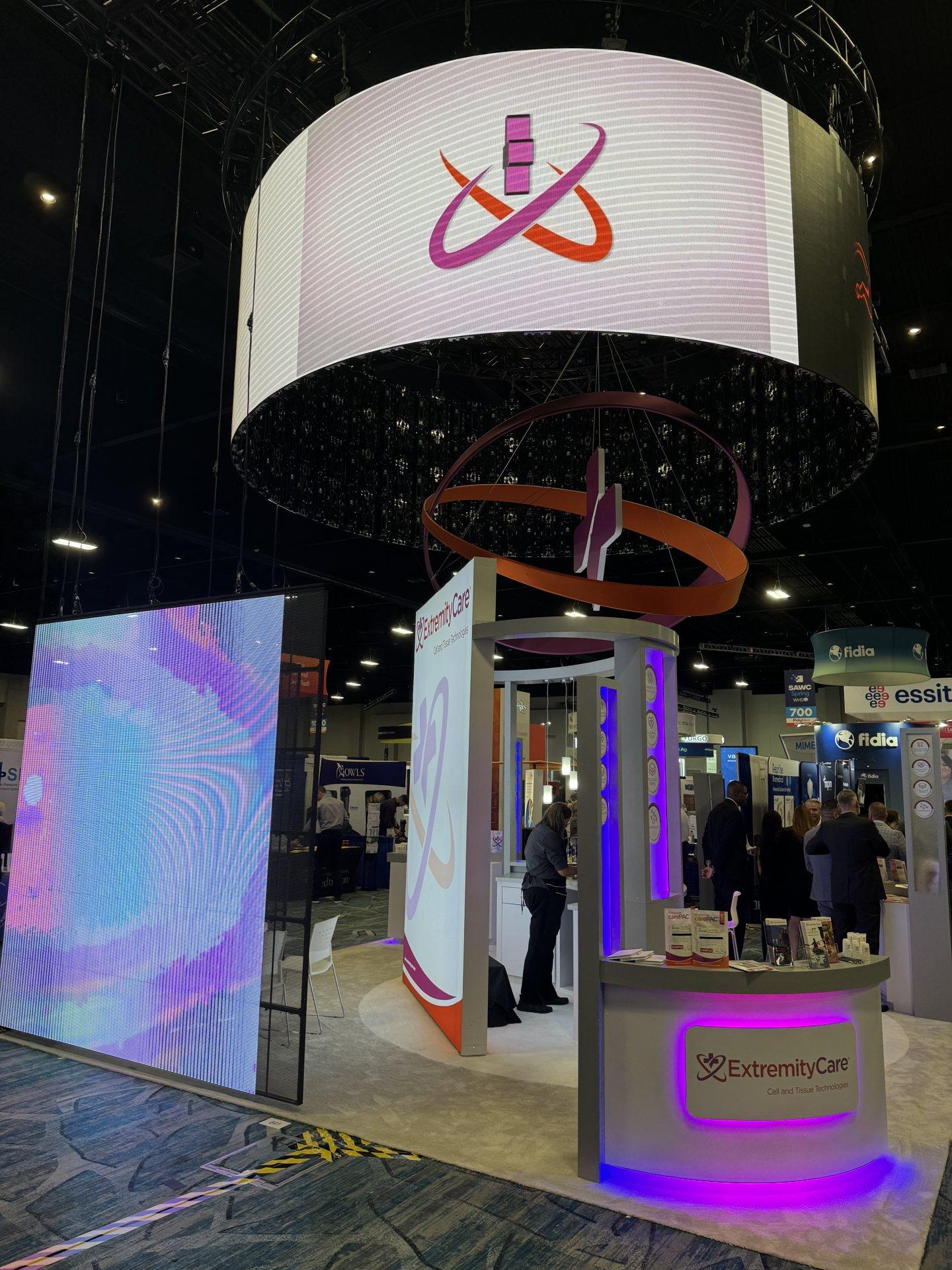
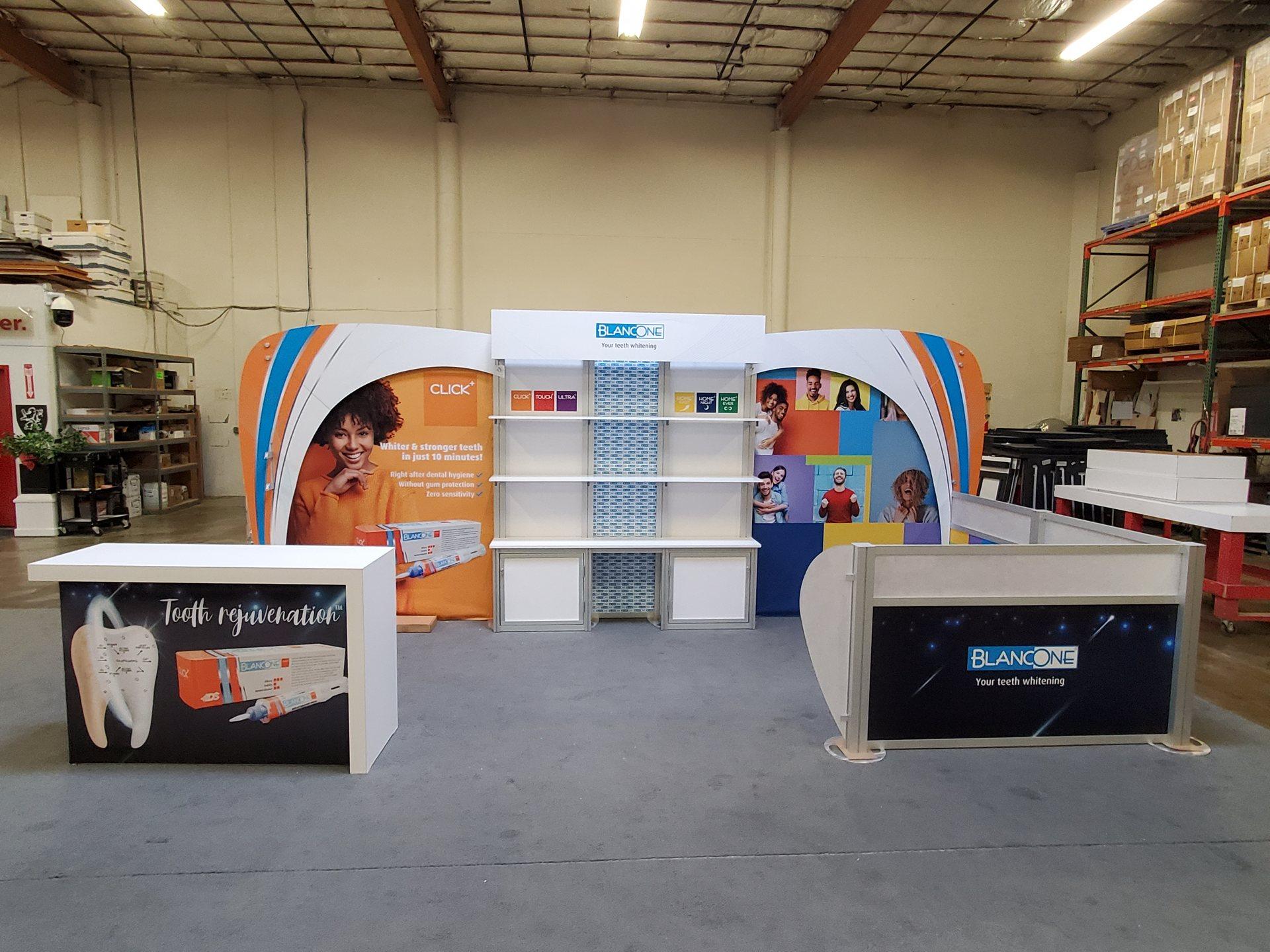
A 30×30 island and a museum lobby speak the same language. Framing. Tensioned fabric. Printed graphics. Integrated lighting. Careful sequencing so it all goes up in the right order. The crew that builds a booth that has to look flawless under show lights and then survive being shipped across the country is more than ready to build a space that goes up once and stays.
If anything, the permanent version is a little kinder to us: it doesn't have to fold into a crate and travel. So if we can build it for a show floor, we can absolutely build it for your building — and hold it to a finish standard that's used to being photographed up close.
It cuts the other way, too. Permanent jobs force a level of finish and durability a three-day booth can get away with skipping, and that discipline raises the floor on everything we build. A donor wall that has to look right for a decade teaches you things a booth that lives in a crate never will. So the crossover doesn't just qualify us for your lobby — it tends to make us better at it than a shop that only ever does one or the other.
What we build when it stays put
- Showrooms — branded retail and B2B sales environments.
- Lobbies and entry walls — donor walls, brand walls, signage systems.
- Museums and galleries — permanent exhibits, rotating panel systems, donor recognition.
- Corporate interiors — meeting spaces, demo zones, branded conference areas.
- Hybrid spaces — rooms that host events and stand on their own in between.
If you're weighing whether this is for you, the spaces that benefit most are the ones that have to be both branded and functional: a showroom that sells while it impresses, a lobby that greets visitors and recognizes donors, a gallery zone that rotates content, or a corporate interior that doubles as an event space. If your space needs to look designed and get updated by your own team down the road, that's squarely what an exhibit builder is good at.
The one thing we do that contractors often don't
Here's where the exhibit background really pays off: we build permanent spaces so your team can update them without calling us back every quarter. That comes straight from the trade show world, where booths are designed to re-skin fast.
So we'll build you a magnetic donor wall where your staff swaps name tiles without a screwdriver. Templated graphic panels you can reprint and pop in. Hot-swap signage. At the end of the install we spend about 45 minutes training your operations folks, and then the space is genuinely yours to run. We did exactly this for a regional museum — a donor wall and a rotating temporary-exhibit zone — and they've changed it out several times since without ever calling us back. That's the goal. I'd rather build you something you can live with than something that needs me on speed dial.
That hand-it-back philosophy is rarer than it should be in permanent work, because plenty of builders would rather you depend on them for every little change. We'd rather earn the next project — the second gallery, the showroom refresh, the sister location — than nickel-and-dime you on a name-plate swap. If your space is going to live for years, it should be something your own team can keep current between the bigger projects we do together.
How a permanent project sequences
A permanent build runs a little differently than a booth, and knowing the shape up front keeps it calm. It usually starts with a site visit and measurements, because a real room has real constraints a show floor doesn't. Then design — drawings and finishes — with a walkthrough before anything is committed. Fabrication happens in our Maryland shop, the same as a booth, which means most of the mess and noise stays out of your building. Then install on site, coordinated around your hours and, where there is one, the general contractor's schedule. We finish with that 45-minute training walkthrough so your team can run the space. No crate to ship at the end — that's the one big difference.
The material choices shift too. For a space that stays put, you design toward durability and serviceability: magnetic donor walls, templated graphic panels sized to standard prints so a reorder drops right in, finishes chosen to wear well under daily traffic rather than a three-day show, and ADA clearances designed in rather than bolted on afterward. It's the same fabrication craft we bring to the floor, tuned for years of use instead of a long weekend.
Why crossover work is good for everybody
Permanent jobs keep our shop sharp in the slower stretches of the show calendar, and the discipline runs both directions. The finish standards from a museum job make our booths better; the speed and modularity from booth work make our permanent installs smarter. You get a builder who thinks about durability and flexibility, which is a rarer combination than it should be. And the same thing that makes our booths work makes our permanent installs work: one shop owns it start to finish, so nothing falls through a seam between vendors. One point of contact, a Maryland shop doing the fabrication, and a finished space handed over clean — with the training to keep it yours.
A couple of honest caveats
Permanent work is scoped differently than a booth. Longer lead times. More coordination — sometimes there's a general contractor, ADA requirements, building considerations. We're glad to work inside all of that; we just plan for it from the start instead of pretending it's a quick booth build. Being straight about that on day one is part of why these projects go smoothly.
Frequently asked questions
Do you really build things that aren't trade show booths? Yes — showrooms, lobbies, donor walls, museum and gallery exhibits, and branded corporate interiors. Same crew, same shop, same care, built to stay in one place.
Can our staff update it without hiring you back? That's the plan. We build in magnetic walls, templated reprintable panels, and hot-swap signage, and we train your team at handoff so you own the asset.
How is a permanent project different from a booth? Mainly the timeline and coordination — longer lead times and sometimes a general contractor, ADA, and building considerations. The fabrication itself is the same discipline we bring to the floor.
If you've got a space in mind, tell us about the room — what it's for, the timing, and the scope. Start an RFQ or call me at (240) 441-0847, and we'll come back with the right shape of next step.